
On the screen printing line, every second saved in cycle time directly boosts throughput. The client required CT<14s, and Jiexiang’s newly upgraded panel visual inspection equipment delivers 9s per piece. Through dual optimization of the handling module and vision system, the unit inspection cycle is reduced by over 35%.
I. Results: How is the 9-second cycle achieved?
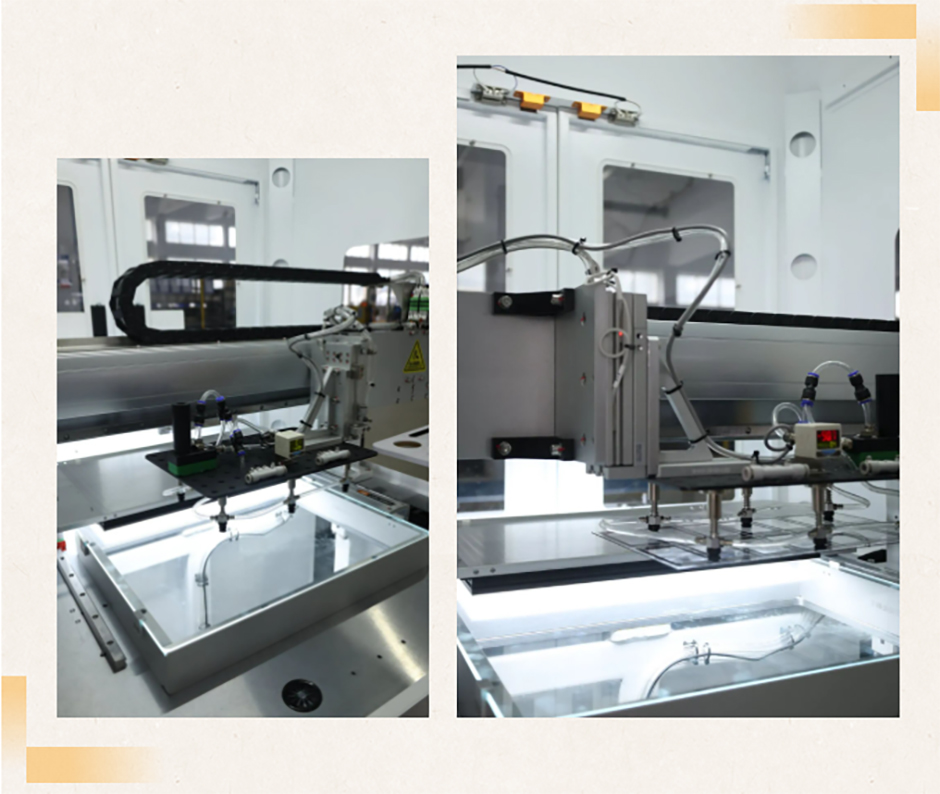
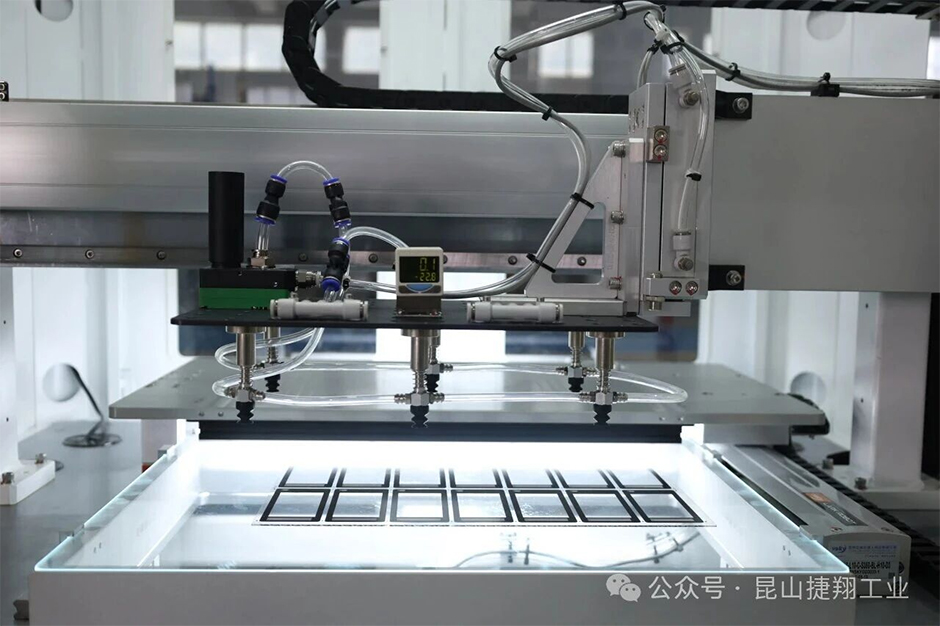
The entire sequence is split into two major modules: material pick-and-place by the handling module and visual inspection. The core principle is to eliminate all waiting time from the original serial workflow.The handling module operates on a tight schedule: picking panels from the screen printer slide table, moving to the inspection station for placement, then returning to the standby position, with a total duration of 7.5 seconds. The key design is that once the handling module finishes material placement at 5.5s, it starts returning immediately without waiting for visual inspection to complete. It completes both material pick-up and placement within one round trip.The visual inspection module runs fully inside this time window. Starting at 5.5s, the surface light source slide moves out for illumination while the lower camera captures images synchronously. After inspection, the surface light source slides back home. This whole process takes 3.5 seconds and runs in parallel with the latter phase of handling motion without mutual interference. Free of idle waiting, the overall line CT stabilizes at around 9 seconds, well below the client’s 14-second requirement and leaving ample margin for production line efficiency gains.
II. Zero-Wait Path Design for Handling Module
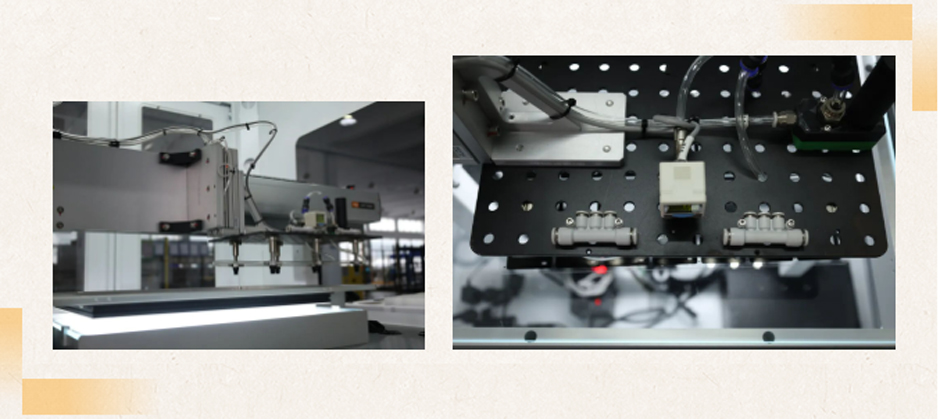
In traditional equipment, the handling module usually waits until inspection finishes before returning. We implemented bidirectional parallel optimization for the handling path.During material picking, the air cylinder descends in just 0.5s, product suction takes 1s, and cylinder lifting consumes another 0.5s. The entire pick action is squeezed within 2 seconds. Material placement is also finely broken down; cylinder descent, placing and lifting actions are scheduled at separate timestamps to avoid overlapping motions that slow down cycle time.More importantly, the round-trip path features zero-redundancy design. After picking, the handling module moves straight to the inspection station in 2s. Once placement is done, it departs immediately for the unloading position of the screen printer with no dwell time, also taking 2s. There is no idle waiting throughout the whole round trip, and every second is dedicated to valid motions.
III. Seamless Workflow Logic of Vision System
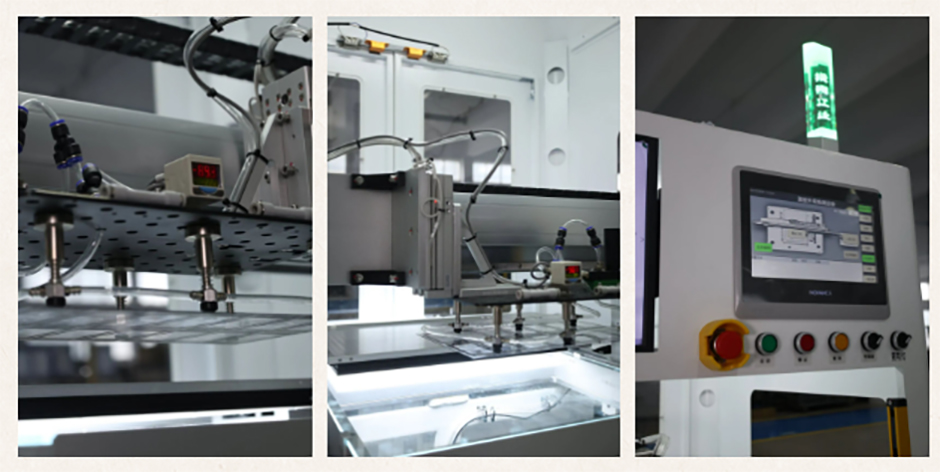
Besides improved handling efficiency, parallel design in visual inspection is another key to cutting cycle time.After the handling module finishes placement at 5.5s, the vision system triggers synchronously: the surface light source slide moves into position for lighting in 1s, and the lower camera captures images to identify screen printing defects such as offset, overflow and contamination within 1.5s. After inspection, the surface light source slide returns home in 1s. The entire inspection process runs within the time window when the handling module travels back. It preserves inspection accuracy without occupying extra line cycle time.Meanwhile, the surface light source slide structure is upgraded for more precise lighting position and stable camera imaging. Speed gains are achieved at no cost to inspection accuracy, delivering both high speed and reliability.
IV. Why CT Optimization Matters Greatly for Screen Printing Lines
Many clients ask: is the difference between 14s and 9s really significant? Let’s do a simple calculation. Based on a 10-hour single shift, the output is around 2,571 panels per shift at a 14s cycle time, versus roughly 4,000 panels at 9s. That adds 1,429 panels per shift, representing over 55% higher throughput. For 24-hour continuous operation, more than 3,400 extra panels can be produced daily, generating millions in additional production value for clients annually.More importantly, this equipment can directly connect to screen printer slides and existing customer tracks. No production line retrofitting is required; efficiency gains take effect right after deployment, with a clear return on investment.
V. Beyond Speed: Jiexiang’s Automation Iteration Logic
Our upgrades always focus on real pain points from customers’ production lines. It supports acrylic panels up to 350×250 mm, compatible with most screen printing product sizes. The inspection covers typical defects including screen printing misalignment, ink overflow and contamination. Automatic NG alerts reduce manual recheck costs. Its compact structure and properly reserved cutout dimensions simplify on-site installation and commissioning.In Jiexiang’s R&D philosophy, speed is never the sole target. Stability, precision and line adaptability represent the core value of automated equipment.